

Internal linking is one of the most effective SEO strategies that website owners can control directly. Unlike backlinks, which depend on external websites linking to your content, internal links allow you to guide users and search engines through your own website structure.
A strong internal linking for SEO strategy helps Google discover your pages, understand relationships between topics, distribute authority, and identify which pages are most important.
Many websites publish high-quality content but fail to connect related pages strategically. This creates disconnected content, weak topical signals, and missed ranking opportunities.
Modern SEO requires more than publishing individual articles. Search engines need to understand how your content connects together and why your website deserves authority on a specific topic.
This is where topic clusters and strategic internal linking become important.
A successful internal linking structure combines:
- Pillar pages
- Supporting articles
- Contextual links
- Descriptive anchor text
- Logical website hierarchy
When these elements work together, your website becomes easier for users to navigate and easier for search engines to understand.
What Is Internal Linking for SEO?
Internal linking is the process of adding hyperlinks that connect one page of your website to another page on the same domain.
For example, a blog discussing website performance may naturally link to a related resource about technical SEO strategy because both topics are connected.
Internal links serve two important purposes:
Helping Users Navigate
Internal links help visitors:
- Find additional information
- Discover related resources
- Move through your website naturally
- Complete important actions
Helping Search Engines Understand Your Website
Search engines use internal links to understand:
- Which pages exist
- How pages relate to each other
- Which topics your website covers
- Which pages are most valuable
A website without a strong internal linking structure creates isolated pages that may struggle to gain visibility.
Types of Internal Links
Not all internal links have the same purpose. Different types of internal links support different SEO and user experience goals.
Navigational Internal Links
These links usually appear in:
- Main navigation menus
- Header sections
- Category pages
They help users access important website areas quickly.
Examples:
- Services
- Blog
- Contact
- Product categories
Navigational links also help search engines understand your website hierarchy.
Contextual Internal Links
Contextual links are placed naturally inside website content. These are among the most valuable internal links for SEO because they connect related topics.
Example:
A blog about SEO audits can link naturally to SEO audit Finland when explaining website analysis processes.
Contextual links provide:
- Additional value for readers
- Stronger topical relationships
- Better content discovery
Footer and Sidebar Links
Footer and sidebar links can support navigation but usually provide less contextual value compared to links placed naturally within content.
Common examples:
- Important business pages
- Related articles
- Legal pages
- Categories
Why Internal Linking Matters for SEO
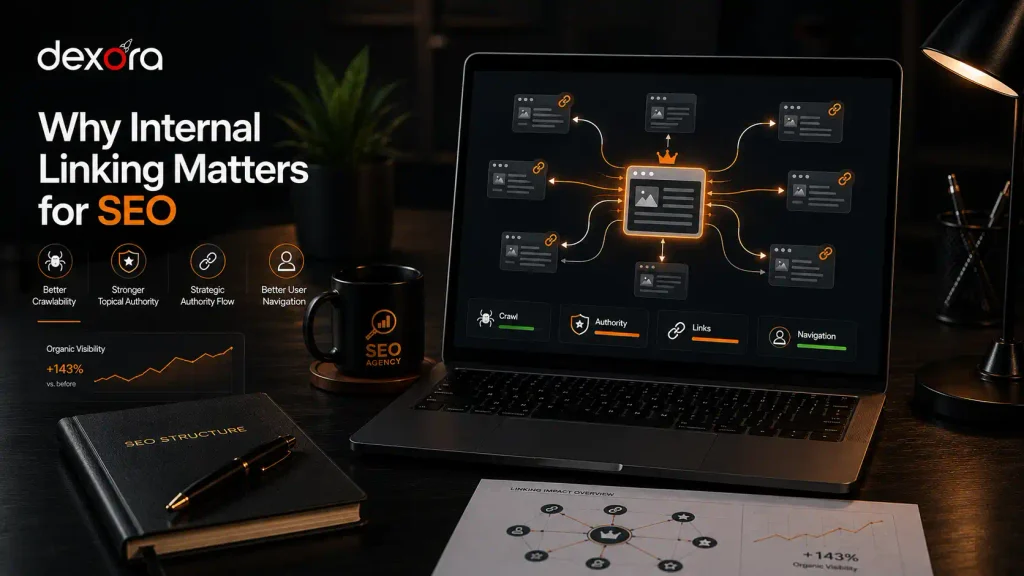
Internal linking impacts several important SEO areas, including crawlability, rankings, user experience, and topical authority.
1. Internal Links Improve Website Crawlability
Search engines discover new pages by following links. When a new article is connected to existing relevant pages, Google can find and understand that content more easily. Without internal links, pages can become orphan pages.
An orphan page is a page that has no internal links pointing toward it. Even if the content is valuable, search engines may not understand its importance.
A proper technical SEO checklist should include internal link analysis, crawl paths, orphan pages, and website architecture improvements.
2. Internal Links Build Topical Authority
Google evaluates websites based on expertise and coverage of specific topics. Publishing one article about a subject is usually not enough to demonstrate expertise. A stronger approach is creating a connected content ecosystem.
For example, a website targeting SEO topics could create:
Main Topic
SEO
Supporting Topics
- Technical SEO
- Local SEO
- WordPress SEO
- SEO audits
- AI search optimization
When these pages link together, Google can better understand that the website has comprehensive knowledge about SEO.
This connected structure helps build topical authority.
3. Internal Links Distribute Link Equity
Internal links help distribute authority between pages. If one page earns backlinks and becomes authoritative, strategic internal links can help support other important pages.
For example: A high-performing blog article can link to a commercial service page that needs stronger visibility.
This creates a flow of authority throughout your website. However, internal links should always be relevant. Adding random links only for SEO purposes can reduce user experience.
A complete SEO services in Finland strategy should combine content optimization, technical improvements, and internal linking to build sustainable organic growth.
What Are Topic Clusters in SEO?
Topic clusters are a content organization model where multiple related pages are connected around one main topic. Instead of creating isolated articles, topic clusters create a complete information network.
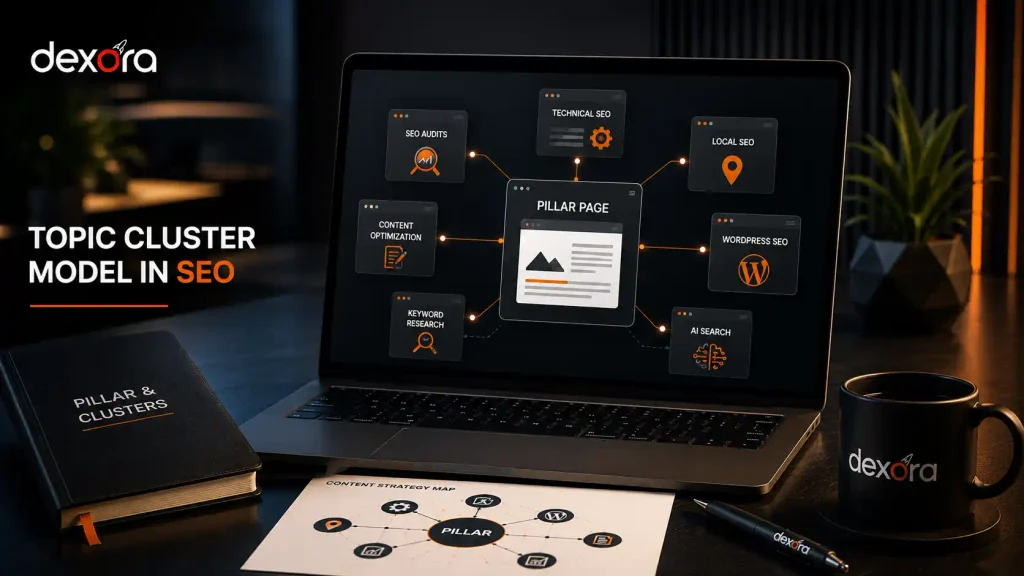
A typical topic cluster contains three parts:
Pillar Page
The pillar page is the main resource covering a broad topic.
Example:
“Complete SEO Guide”
It provides an overview and links to detailed supporting articles.
Cluster Pages
Cluster pages cover specific subtopics in greater detail.
Example:
SEO pillar page:
Links to:
- Technical SEO guide
- Local SEO guide
- Keyword research guide
- Content optimization guide
Internal Links
Internal links connect all related pages together.
This helps:
- Users discover more information
- Google understand topic relationships
- Search engines identify expertise
How to Build an Internal Linking SEO Strategy
A successful internal linking strategy requires planning. Randomly adding links throughout your website does not create strong SEO value.
The goal is to create a logical structure where every important page has clear relationships with other relevant pages.
A strong process includes:
- Understanding your website structure
- Identifying important pages
- Creating topic clusters
- Adding contextual links
- Optimizing anchor text
- Monitoring and improving links over time
Step 1: Understand Your Website Structure
Before adding internal links, understand how your website content is organized.
Your website should have a clear hierarchy:
Homepage
|
Main Categories
|
Service Pages
|
Supporting Blog Content
This structure helps search engines understand which pages are most important.
Important pages should not be buried deep within your website. Ideally, users and search engines should reach valuable content within a few clicks.
For example, a digital marketing website may structure content like:
SEO Services
|
|
————————-
| | |
Technical Local SEO AI SEO
SEO
Each supporting page strengthens the main SEO topic.
Step 2: Identify Your Most Important Pages
Not every page has equal SEO value.
Identify pages that are important for:
- Revenue generation
- Lead generation
- Organic traffic
- Business goals
- Target keywords
These pages should receive more internal links.
Examples:
- Service pages
- Location pages
- High-performing blogs
- Conversion pages
You can analyze your website performance using tools such as Google Search Console, Google Analytics, and SEO crawlers.
A detailed SEO audit can help identify pages with weak internal connections, crawl issues, and missed linking opportunities.
Step 3: Create Topic Clusters Around Your Main Topics
Topic clusters are one of the most effective ways to improve internal linking SEO.
Instead of publishing unrelated articles, organize content around major topics.
Example:
Pillar Page:
SEO Services
↓
Supporting Articles:
- What is SEO?
- Technical SEO Checklist
- Local SEO Guide
- WordPress SEO Guide
- SEO Audit Guide
Each supporting article links back to the main pillar page. This creates a clear topical relationship.
Search engines can better understand:
- Your expertise
- Your content depth
- Your website’s subject areas
Step 4: Add Contextual Internal Links
Contextual links are links placed naturally inside your content.
They are usually the most valuable internal links because they appear where users are actively consuming information.
Example:
A blog discussing website speed can naturally mention:
“Improving website performance requires proper optimization of images, scripts, and technical elements.”
The phrase can link to a related resource about WordPress SEO Finland.
Good contextual links should:
- Support the current topic
- Help users learn more
- Provide additional value
- Connect related pages
Avoid adding links only because you want to increase link numbers. Quality is more important than quantity.
Step 5: Optimize Internal Link Anchor Text
Anchor text is the clickable text users see when clicking a link.
Example:
Bad anchor text:
“Click here”
Better anchor text:
“technical SEO checklist”
Search engines use anchor text to understand what the linked page is about.
Good anchor text should be:
- Descriptive
- Relevant
- Natural
- Helpful for users
Avoid:
- Repeating the same exact keyword excessively
- Using unrelated keywords
- Creating unnatural sentences
A natural approach is to use variations.
Example:
Instead of always using:
“technical SEO services”
You can use:
- technical SEO strategy
- technical SEO improvements
- website technical optimization
This creates stronger semantic signals.
Step 6: Link From High-Authority Pages to Important Pages
Some pages naturally gain more authority because they receive:
- Backlinks
- Traffic
- User engagement
These pages can help strengthen other important pages through internal links.
For example:
A popular blog article can link to:
- A service page
- A related guide
- A conversion page
This helps distribute SEO value throughout your website.
However, avoid excessive linking. Every link should have a clear purpose.
How Internal Linking Supports GEO and AI Search

Internal linking is becoming even more important with the growth of AI-powered search.
Search engines and AI systems need to understand:
- What your website specializes in
- How different topics connect
- Which pages provide deeper expertise
A strong internal linking structure creates clear relationships between:
- Entities
- Topics
- Services
- Supporting information
For example:
A website covering AI SEO may connect:
AI SEO Guide
↓
AI Visibility Audit
↓
Google AI Overview Optimization
↓
ChatGPT Visibility
This helps AI systems understand the website’s expertise around AI search optimization.
Businesses focusing on AI-driven search visibility can also explore AI search optimisation Finland to strengthen their presence in emerging search experiences.
Common Internal Linking Mistakes to Avoid
Many websites lose SEO opportunities because of poor internal linking practices.
1. Creating Orphan Pages
A page without internal links pointing toward it becomes difficult to discover.
Solution:
Every important page should receive relevant internal links.
2. Using Generic Anchor Text
Avoid:
- Click here
- Read more
- Learn more
Use descriptive phrases that explain the destination page.
3. Adding Too Many Links
More links do not always mean better SEO.
Too many links can:
- Reduce user focus
- Make content difficult to read
- Reduce link value
Only add links that improve the user journey.
4. Linking Unrelated Pages
Every internal link should have topical relevance.
A blog about SEO should not randomly link to unrelated topics.
Relevant connections create stronger semantic signals.
5. Ignoring Old Content
Older articles often contain valuable authority.
Updating old content with new internal links can help:
- Improve rankings
- Support newer pages
- Strengthen topic clusters
Internal Linking SEO Checklist
Use this checklist when improving your website:
✓ Create a clear website hierarchy
✓ Identify important pages
✓ Build topic clusters
✓ Connect related content
✓ Use descriptive anchor text
✓ Link from high-authority pages
✓ Fix orphan pages
✓ Remove broken internal links
✓ Avoid excessive linking
✓ Review internal links regularly
A website’s internal linking structure should evolve as new content is published.
Regular monitoring helps maintain strong crawlability and topical organization.
How Many Internal Links Should a Page Have?
There is no fixed number of internal links recommended by Google.
The correct number depends on:
- Content length
- Topic complexity
- User needs
- Website size
A long-form article may naturally contain many internal links, while a short page may only need a few.
The priority should always be relevance and usefulness.
How Often Should You Update Internal Links?
Internal links should be reviewed whenever you:
- Publish new content
- Create new services
- Remove old pages
- Change website structure
- Update important articles
Regular reviews ensure your website remains connected and easy for search engines to understand.
Final Thoughts: Build Internal Links That Help Users and Search Engines
Internal linking for SEO is not just about adding hyperlinks between pages. It is about creating a clear information structure that connects your expertise together.
A strong internal linking strategy helps:
- Search engines discover pages
- Users find valuable information
- Websites build topical authority
- Important pages gain visibility
The best internal linking strategies combine:
- Topic clusters
- Contextual links
- Optimized anchor text
- Logical site architecture
When done correctly, internal linking becomes a foundation for sustainable SEO growth.
If you want to improve your website structure, identify internal linking opportunities, and build stronger topical authority, Dexora Digital can help with a complete SEO services strategy designed around technical SEO, content structure, and search visibility.
Frequently Asked Questions (FAQs)
1. What is internal linking in SEO?
Internal linking connects pages within the same website using hyperlinks. It helps users navigate content while allowing search engines to discover pages, understand relationships, and evaluate website structure.
2. Why are internal links important for SEO?
Internal links improve crawlability, distribute link equity, support website navigation, and help search engines understand important pages. They also strengthen topical relationships between related content.
3. How many internal links should a blog post have?
There is no fixed number of internal links required. A blog should include relevant links wherever they improve user experience, support related topics, and help search engines understand content relationships.
4. What is a topic cluster in SEO?
A topic cluster is a group of related pages connected around a main pillar topic. It combines comprehensive content with internal links to demonstrate expertise and improve topical authority.
5. What is anchor text in internal linking?
Anchor text is the clickable text used in a hyperlink. Effective anchor text describes the linked page topic clearly and helps users and search engines understand the relationship between pages.
6. Do internal links improve Google rankings?
Internal links can support rankings by improving crawlability, distributing authority, and creating stronger topical signals. However, they work alongside content quality, relevance, and other SEO factors.
7. What are orphan pages in SEO?
Orphan pages are website pages that have no internal links pointing to them. They can be difficult for search engines to discover and may receive less visibility in search results.
8. Should internal links use exact match keywords?
Internal links can use keyword-focused anchor text, but they should remain natural. Using varied, descriptive phrases creates better user experience and stronger semantic relevance.
9. How do internal links help AI search optimization?
Internal links help AI systems understand relationships between topics, entities, and content depth. A connected website structure makes expertise easier for search engines and AI models to interpret.
10. What is the difference between internal and external links?
Internal links connect pages within the same website, while external links point to other domains. Internal links improve site structure, while external links can support credibility and references.
11. Can too many internal links hurt SEO?
Too many unnecessary internal links can reduce usability and make pages harder to navigate. Links should be added strategically based on relevance and user value.
12. How can I find internal linking opportunities?
You can find opportunities through SEO audits, site crawlers, Google Search Console data, and content analysis. These methods identify missing links, orphan pages, and pages needing stronger support.
Want to build a stronger website structure and improve organic visibility? Explore Dexora Digital’s SEO services in Finland to create a strategic internal linking and content growth plan.