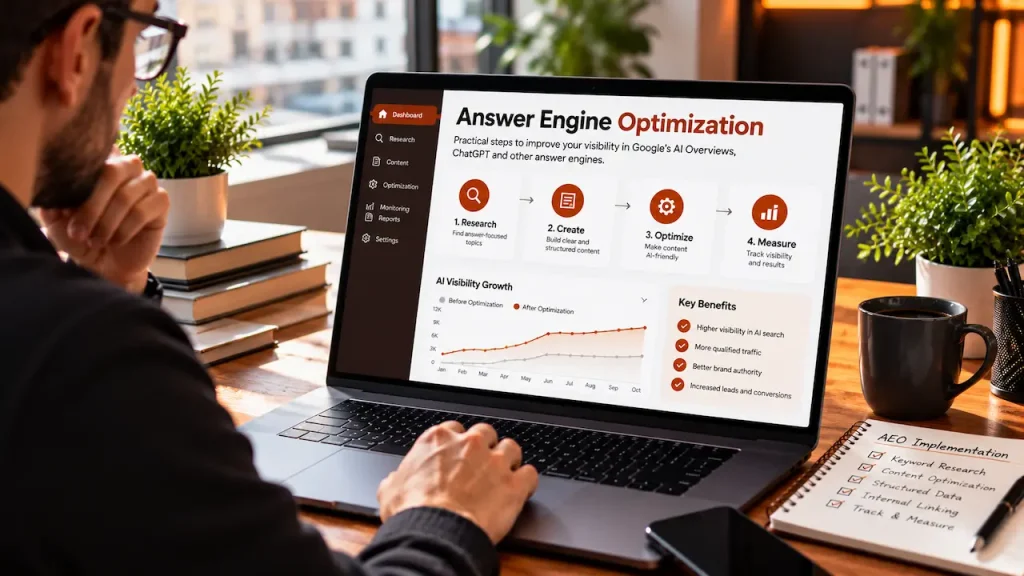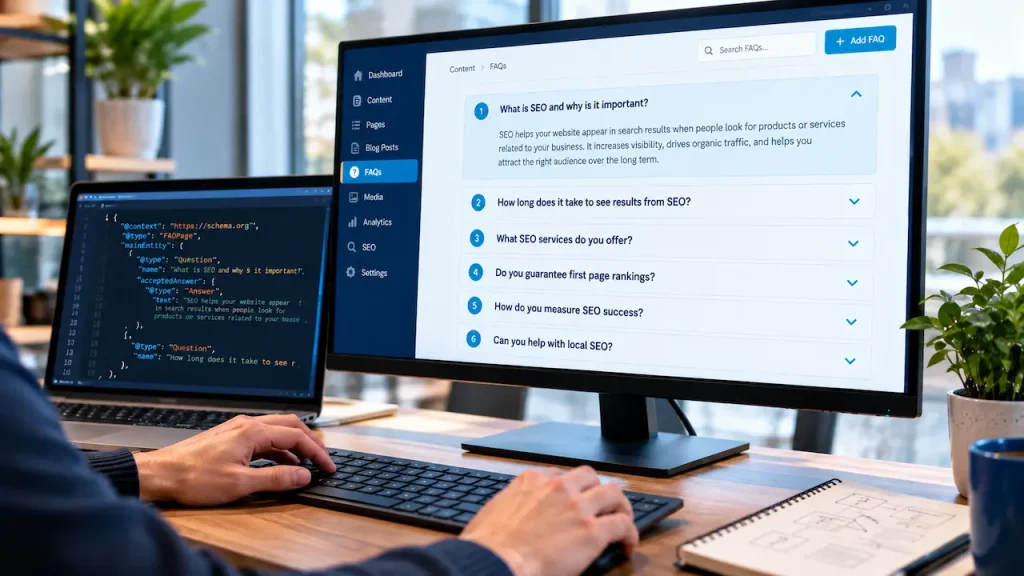
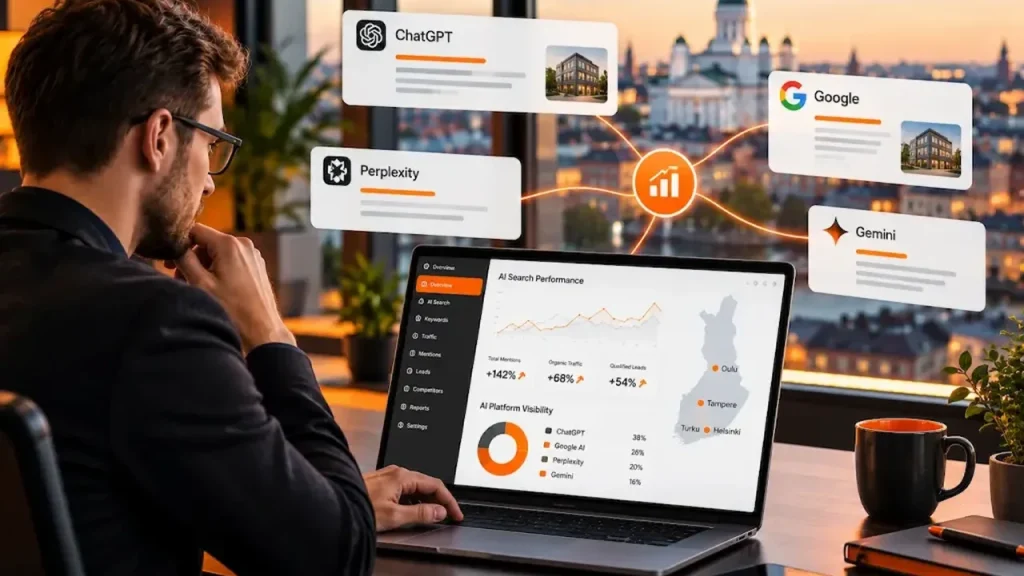
Finding a business used to follow a relatively familiar pattern. A customer entered a search query, compared websites in the results, read a few reviews, and contacted a suitable provider.
That journey still exists, but it is no longer the only way customers discover companies.
Today, someone researching a service may ask ChatGPT for an explanation, use Google AI Overviews to understand their options, or continue refining questions through a conversational search experience.
For Finnish businesses, this creates new challenges around discoverability, trust, and the information customers encounter before making contact.
At Dexora Digital, we believe the important question is not simply whether AI search is growing. It is whether your business provides the kind of information customers need during these changing research journeys.
What Is Customer Discovery in AI Search?
Customer discovery is the process through which potential buyers become aware of businesses, investigate their options, and identify suitable providers. In traditional search, this often involves looking through search results and visiting individual websites.
In AI-assisted discovery, customers may receive a synthesized explanation before visiting a business website.
For example, a company looking for a technical consultant could ask an AI assistant to explain which qualifications matter, what questions to ask, and how different providers approach the work. The answer may reference external sources, identify useful evaluation criteria, or include links to relevant companies.
This does not mean every AI assistant is a business directory or that every recommendation is reliable. It means businesses need to consider how their expertise and services are represented throughout the information customers use for research.
How the Customer Journey Is Changing
The modern buying journey can move between search engines, AI assistants, company websites, review platforms, and conversations with colleagues. The sequence is not always predictable.

Customers ask more detailed questions
Traditional searches often begin with a short phrase such as “SEO agency Helsinki.”
A conversational question might be much more specific:
“Which type of SEO agency should a Finnish B2B company choose if it wants better visibility in Google and AI search?”
This question reveals business context, location, and the customer’s decision criteria. A company whose website explains those topics clearly is better positioned to serve someone with that information need.
Research and comparison can happen earlier
Potential customers may use AI systems to explore a problem before they know which service they need. A business owner concerned about declining website enquiries could ask whether the cause is technical SEO, weak content, local search visibility, or conversion performance.
By the time the person contacts an agency, they may already have developed expectations about services and possible solutions.
Businesses therefore need content that supports the research stage as well as the final purchasing decision.
Discovery does not always produce an immediate click
A user may receive enough introductory information within a search interface to continue without opening a website immediately. However, complex decisions still require direct verification.
Customers may need to examine case studies, discuss project scope, review service details, or compare providers. Website visits remain valuable, but businesses should avoid measuring every stage of AI-assisted discovery solely through clicks.
Why This Matters for Businesses in Finland
Finland presents several factors that businesses should consider when planning digital visibility. These include regional differences, multilingual audiences, international customers, and industries with highly specialized purchasing requirements.
Local customers need relevant answers
Someone searching for a local service in Oulu may care about availability, service coverage, language, and the ability to arrange an appointment. A customer researching the same service in Helsinki might also compare specialization, business experience, and suitability for a larger project. These differences should be reflected in useful website content. Our local SEO services support discoverability for businesses serving defined geographic areas.
Local information should be authentic. Publishing dozens of nearly identical city pages without meaningful location-specific value is unlikely to help customers.
B2B customers require deeper evidence
Business-to-business purchasing often involves multiple stakeholders and more extensive research. An engineering company evaluating digital marketing support may want to understand whether an agency has experience with technical industries, long sales cycles, and specialist terminology. A generic service statement provides limited reassurance.
Detailed methodologies, project examples, qualifications, and realistic expectations help buyers determine whether a provider understands their industry.
Language affects how businesses are discovered
Customers in Finland may research services in Finnish, Swedish, or English. International buyers may use different terminology from domestic customers, even when searching for similar services. Businesses should investigate their actual audience before deciding which languages and pages deserve investment.
For multilingual websites, clear language targeting and appropriate technical implementation are especially important.
What Information Do AI Search Experiences Use?
The answer depends on the platform and the query. AI-powered experiences may draw on searchable webpages, available indexed information, retrieved sources, and other platform-specific data. They may also produce incomplete or inaccurate responses. There is no single checklist that guarantees a business will be selected or mentioned.
However, businesses can improve the quality and accessibility of information available about them.
Clear service descriptions
A strong service page should explain the specific problem being solved, the audience served, the process involved, and the expected deliverables.
For example, a cybersecurity provider should distinguish between security assessments, monitoring, compliance support, and incident response. A customer should not have to infer what the business actually offers.
Accurate company information
Business names, locations, contact details, and services should be consistent where they appear. Outdated directory listings and contradictory descriptions can confuse potential customers independently of any AI system.
Independent supporting references
Genuine customer reviews, reputable directories, industry publications, and relevant partnerships can give potential customers additional ways to verify a business. Such references can support research, although they do not guarantee AI citations or favourable recommendations.
Five Ways AI Search Changes Marketing Strategy
1. Customer questions become a content-planning resource
Keyword research remains important, but businesses should also investigate the questions buyers ask throughout their decision-making process. Sales conversations, support enquiries, proposals, and customer interviews provide useful insight.
A company offering commercial HVAC services might identify questions about maintenance contracts, equipment replacement, running costs, and legal requirements. Addressing those questions can make its website more relevant to real purchasing decisions.
2. Topical depth becomes more valuable than generic coverage
Publishing one superficial article on every marketing topic does not establish meaningful expertise. A focused content program should explain core services and support them with articles addressing implementation, comparisons, costs, limitations, and industry applications.
Our content strategy and semantic SEO services are built around creating connected resources instead of disconnected articles.
3. Business credibility needs visible evidence
Customers increasingly encounter claims before they meet a provider. A company that describes itself as an expert should be able to support that claim. Useful evidence may include real project outcomes, named qualifications, documented methodologies, or examples of completed work.
For instance, our Keentel Engineering AI search case study gives readers a relevant project example rather than relying only on general statements about AI visibility. Results should always be read in their original project context.
4. Search measurement needs a broader perspective
Businesses still need to monitor organic traffic, conversions, and search visibility. They may also benefit from reviewing sampled AI responses relevant to their products and services. Because AI outputs vary, mention tracking needs repeatable procedures and careful interpretation. A single favourable response is not proof of permanent visibility.
5. Website experience remains essential
AI search does not eliminate the importance of a useful website. When potential customers arrive, they still need accurate information, accessible navigation, a clear offer, and a straightforward way to enquire.
Businesses that improve discovery but ignore conversion may generate attention without enough commercial benefit.
How Finnish Businesses Can Adapt Their Websites
The first priority is understanding what customers need to know before making contact. Review existing service pages and identify missing information.
Do your pages explain scope, suitability, business benefits, and common limitations?
Do you address price considerations or explain how quotes are prepared?
Are there relevant examples of completed projects?
Next, review the website’s technical foundations. Important pages should be crawlable, internally linked, and accessible across devices.
Our technical SEO checklist outlines the main areas to examine. Then assess whether supporting content covers the customer’s wider decision process.
An accounting company might benefit from explaining bookkeeping requirements, software integrations, reporting processes, and how businesses choose an accounting provider. An industrial supplier might focus on specifications, procurement considerations, installation requirements, and maintenance.
The content should reflect the actual purchasing context rather than a generic collection of popular AI-related keywords.
Should Businesses Optimize for ChatGPT and Google Separately?
Different platforms may retrieve and present information differently, so monitoring them separately can be useful. However, businesses should not begin by creating duplicate versions of every page for each AI assistant.
A better starting point is one accurate, useful, accessible source of information about the company and its services. From there, a business can assess differences in discoverability or factual representation across platforms.
Our guide explaining how businesses can improve their chances of being mentioned in ChatGPT and AI Overviews explores this topic in more detail.
Measuring AI-Assisted Customer Discovery
A practical measurement plan should begin with a defined set of customer journeys. Choose questions related to your key services, locations, and purchasing criteria. For each question, record whether the business is mentioned, whether relevant pages are linked, and whether the information is accurate. Repeat the review under reasonably consistent conditions.
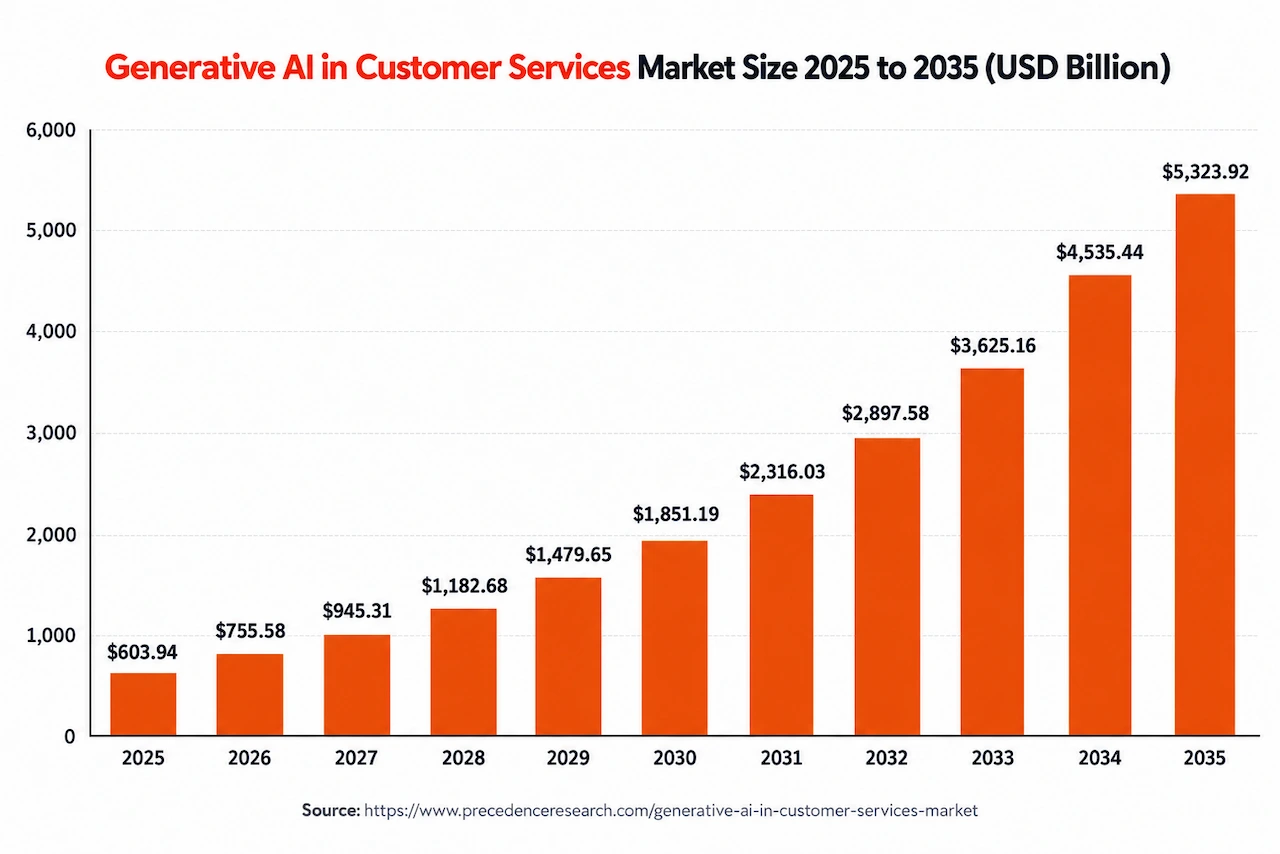
At the same time, examine organic search performance, branded searches, enquiries, lead quality, and customer feedback. It can also be useful to ask new enquiries how they discovered the business, while recognizing that people may interact with several channels before making contact.
The goal is not to attribute every sale to one AI response. It is to understand whether the business remains discoverable and credible across the channels customers use. Our AI visibility services focus on turning these observations into useful improvement priorities.
Common Mistakes Businesses Should Avoid
One mistake is responding to AI search by publishing large quantities of repetitive content. This may increase page count without improving the usefulness of the website. Another mistake is treating AI mentions as verified endorsements. A model-generated recommendation is not the same as a certification, partnership, or customer review.
Businesses should also avoid using unsupported statistics about AI adoption to create unnecessary urgency. Finally, ignoring established marketing fundamentals remains risky.
Useful service information, technical accessibility, local relevance, and clear conversion paths are still necessary.
Frequently Asked Questions
Will AI search replace Google for Finnish customers?
AI-assisted experiences are becoming part of search, including within Google itself. However, there is no sound reason to assume all customers will abandon conventional search or individual websites.
Can local Finnish companies appear in AI search results?
They may appear or be referenced depending on the platform and query. Clear company information, relevant website content, and accurate business profiles are practical foundations.
Is AI search more important for B2B or B2C companies?
Both may benefit. The most relevant opportunities depend on how customers research products and services. Complex B2B purchasing often creates opportunities for detailed educational content.
Do businesses need separate content for every AI platform?
Not necessarily. Begin with reliable website content, then monitor meaningful differences between platforms before deciding whether additional work is justified.
How can a business tell whether AI search generates leads?
Combine available analytics, enquiry-source questions, referral information, and repeatable visibility monitoring. Do not rely on AI mentions alone.
Preparing Your Business for the Next Stage of Customer Discovery
AI search is changing parts of the research journey, but the underlying customer need remains the same: people want reliable information that helps them make good decisions.
Finnish businesses should focus on explaining their services clearly, supporting claims with evidence, answering buyer questions, and making their websites accessible.
At Dexora Digital, we help businesses evaluate how they appear across traditional and AI-powered search and identify improvements that support meaningful business outcomes.
Request a free AI and SEO audit to understand where your search visibility strategy can improve.