Client: Keentel Engineering | Sector: Electrical power systems engineering | Market: United States / North America | Work: Technical SEO, topical content architecture, structured data, AI search optimization. | Growth period: Approximately 15 months according to the supplied report.
Executive summary: engineering expertise made easier to discover
Keentel Engineering, a US-based engineering business, operated in a specialist market where potential buyers search for technical topics such as substation design, electrical power system studies, point of interconnection engineering and NERC compliance services. The supplied project report describes an existing website with limited organic visibility and no meaningful AI search presence at the outset.
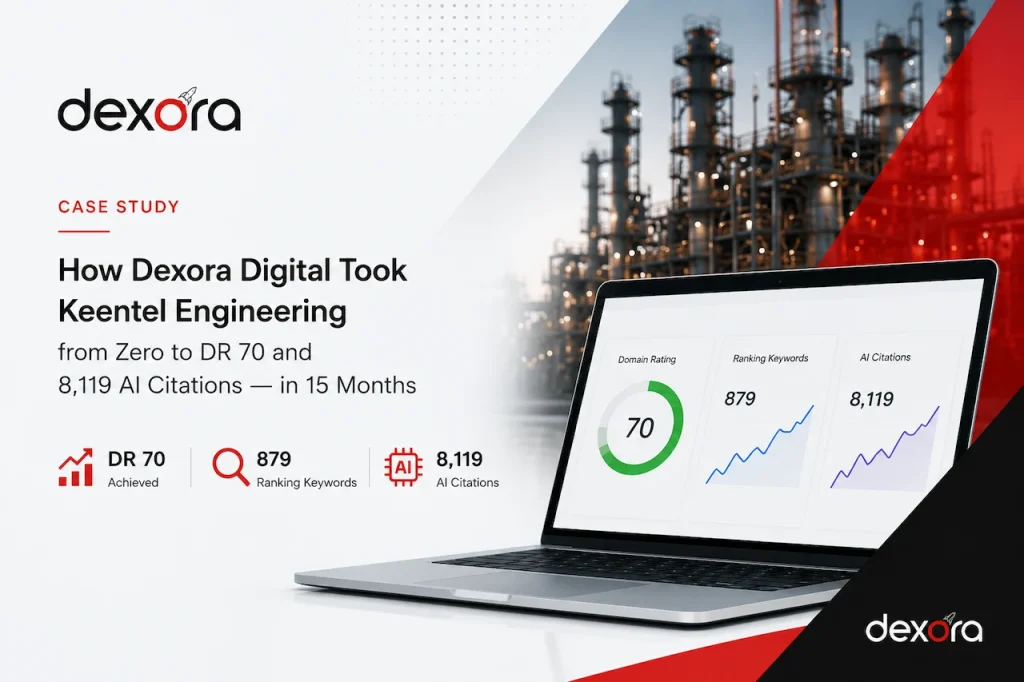
Our documented scope was to rebuild the technical SEO foundation, implement structured data, add an llms.txt file, work on FAQ-related markup and establish a topical content architecture. The report attributes growth from 81 to more than 1,100 organic keywords over roughly 15 months to this program and states that tracked AI citations reached 8,119 in one month.
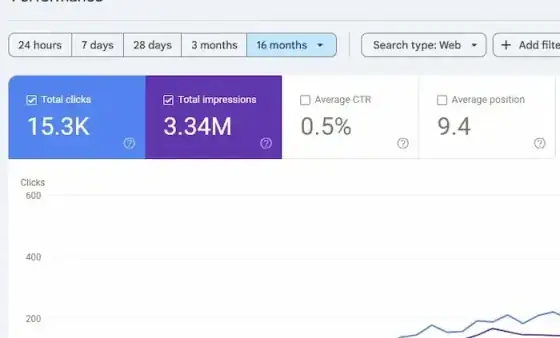
The accompanying Google Search Console screenshot shows approximately 3.34 million impressions and 15,300 clicks in a selected 16-month period. The report also claims 120,000 generative-AI-related impressions over three months, although that specific segmentation cannot be independently reconstructed from the supplied screenshots.
Request a free AI and SEO audit →
The challenge: specialist engineering services with limited search visibility
Power engineering firms serve technically knowledgeable buyers who often research complex systems before making an enquiry. Generic service descriptions alone may not answer their questions about technical studies, grid connections, substations or regulatory compliance.
The report identifies two central challenges: an existing website with weak organic visibility and a lack of AI search presence. The opportunity was to make the firm’s services and technical expertise easier to understand in traditional search and emerging AI-generated discovery experiences.
Communicating highly technical capabilities
Buyers searching for power system studies or substation design expect specific and useful information. The content strategy needed to reflect the actual terminology and relationships between engineering services and relevant technical topics.
Building visibility beyond branded searches
The goal was broader coverage of commercially and technically relevant searches rather than depending only on people already familiar with Keentel Engineering.
Our SEO and AI search strategy
1. Rebuild the technical SEO foundation
The supplied project description states that the technical SEO foundation was rebuilt. Technical foundations help search engines discover and interpret important content. The report does not include a complete change log of crawling, canonicalization, redirects or performance fixes, so those actions are not individually asserted as completed.
2. Develop a topical content architecture
Rather than treating each page as an isolated keyword target, the reported approach organized specialist engineering content around related service and knowledge areas. Topical coverage can help users navigate between relevant topics and provide search engines with a clearer understanding of a website’s content.
3. Implement structured data
The report states that structured data was implemented, including FAQPage schema. Structured data can describe visible page information in a standardized format, but does not guarantee enhanced search appearances or citations in AI results. In particular, FAQ rich-result eligibility is restricted by Google and should not be promised to a general engineering site.
4. Add an llms.txt resource
An llms.txt file was included as part of the reported implementation. It may provide an additional machine-readable guide to site content for systems that choose to use it, but it is not a Google ranking factor or a guaranteed mechanism for obtaining AI citations.
5. Align service information with AI search questions
The supplied report documents appearances in Google AI Overview results for engineering topics including advanced power system studies, substation design, NERC compliance and point of interconnection. These examples demonstrate that particular Keentel pages were surfaced in the captured results, without establishing that every related query will return the site.
The results: organic keyword growth and expanded search visibility
From 81 to more than 1,100 ranking organic keywords
The project report records growth from 81 ranking keywords to more than 1,100 during a 15-month period. That is an increase of more than 1,019 keywords and roughly 13.6 times the initial keyword count. The Semrush keyword distribution chart on page 1 shows a broadly rising curve across the displayed period. Keyword database counts can fluctuate, and these figures represent the source’s reported snapshot.
Google Search Console: 3.34 million impressions and 15,300 clicks
The Search Console screenshot on page 1 uses a 16-month filter and reports 3.34M impressions, 15.3K clicks, a rounded 0.5% average CTR and 9.4 average position. These are aggregate Google search metrics and do not mean all individual keywords rank in the top ten.
Semrush organic traffic and link data
The Semrush overview screenshot displays approximately 808 estimated organic visits, 1.1K ranking organic keywords, 935 referring domains and 7.8K backlinks at capture time. Semrush traffic estimates should not be conflated with Search Console clicks.
Authority Score improvement
The written report says Authority Score increased from near zero to 22. One Semrush snapshot shows a score of 23, while an older trend screenshot on page 2 displays 20 at a historical point. These numbers refer to different observations; none is the same as Ahrefs Domain Rating.
AI search visibility: 8,119 monthly citations reported
The written report states that Keentel Engineering achieved 8,119 AI citations per month across ChatGPT, Google AI Mode, Google AI Overviews and Gemini. This is presented as a reported project outcome, not a value independently reproduced from the overview screenshot. That screenshot shows an AI Visibility score of 14, eight mentions and 208 cited pages, based on its own platform definitions and measurement period.
The report also states that approximately 120,000 generative AI impressions were measured over three months. Its supplied Google Search Console screenshot shows overall web-search impressions, not a separate 120K AI-only impression segment. We therefore disclose that limitation rather than equating these two figures.
Examples captured in Google AI Overviews
Several screenshots document Keentel Engineering appearing as a source in AI Overview experiences for industry-relevant topics:
- Advanced power system studies: a captured Google result references Keentel content about medium- and high-voltage engineering studies.
- Substation design: a captured result includes Keentel material discussing electrical substation planning.
- NERC compliance services: a captured AI result references Keentel content related to reliability compliance support.
- POI interconnection: a captured result includes a Keentel interconnection engineering page.
These screenshot examples appear on pages 2–4 of the uploaded source. AI Overview inclusion is query-, location- and time-dependent and cannot be guaranteed or assumed to persist.
What engineering and infrastructure businesses can learn
Technical accuracy is a competitive advantage
Detailed content grounded in real engineering expertise can be more useful to specialist buyers than generic descriptions. Service content should be reviewed for technical accuracy and avoid unsupported compliance or performance claims.
Organize content around connected technical topics
Clear relationships between power system studies, substations, interconnection and compliance services help users explore relevant information and understand a firm’s service scope.
Measure Google performance and AI visibility separately
Google Search Console impressions and clicks, Semrush organic keyword counts and AI-source citation reports are different indicators. None independently proves leads, contract wins or revenue.
Evidence and measurement methodology
Primary source: the supplied four-page PDF, Engineering SEO: 8,119 AI Citations/Month + 1,100 Keywords, North America.
- Page 1: Semrush SEO and AI Search overview, organic keyword distribution, Google Search Console 16-month summary and traffic-by-location report.
- Pages 2–4: the project description, Authority Score history and example screenshots of Keentel being referenced in Google AI Overviews for engineering-related searches.
- Page 4 narrative: 81 to 1,100+ organic keywords in 15 months, 8,119 claimed AI citations per month, 120,000 reported generative AI impressions over three months and Authority Score reaching 22.
Limitations: The source does not include exportable AI citation records, an independent 120K AI-impression breakout, exact keyword lists, conversion outcomes or attributed revenue. Results are historical and should not be interpreted as current live measurements or guaranteed outcomes.
Frequently asked questions
What kind of engineering firm is Keentel Engineering?
The case concerns a US-based power engineering company whose search topics include substation design, power system studies, NERC compliance and point of interconnection engineering.
How many organic keywords did the site gain?
The report states ranking keywords increased from 81 to more than 1,100 over approximately 15 months.
What are the 8,119 monthly AI citations?
They are a reported monthly visibility metric from the supplied project narrative. The underlying citation-level export is not included, so the exact counting methodology cannot be independently verified.
What were the Google Search Console results?
The 16-month screenshot shows approximately 3.34 million impressions, 15,300 clicks, 0.5% CTR and an average position of 9.4.
Did the project use FAQPage schema?
Yes, the supplied narrative lists FAQPage schema among the implemented structured-data elements. That does not imply the site is eligible for Google’s FAQ rich results.
Does llms.txt guarantee AI search visibility?
No. It is not a guaranteed indexing or citation mechanism, and its treatment depends on the system reading it.
Which AI search examples are documented?
The supplied screenshots include Google AI Overview references to Keentel Engineering for advanced power studies, substation design, NERC compliance and POI interconnection.
Can the strategy be adapted to European engineering companies?
The technical SEO and content architecture principles can be adapted, but each business needs market-specific research, localization and specialist review of its engineering content.
Want better visibility for your engineering services?
Dexora Digital supports technical SEO, content strategy and AI search visibility for businesses in Finland and across Europe. Start with a review of the opportunities most relevant to your services, website and target markets.
Get Your Free AI & SEO Audit → Technical SEO AI Search & Organic Growth Content Strategy